
Fast, Reliable Attic Insulation Across View Park-Windsor Hills
Attic insulation in View Park-Windsor Hills usually means something different than it does in the flatlands below. Most homes here were built between the 1940s and 1970s as custom architect-designed residences on sloped, hillside lots. Many have vaulted or beamed ceilings with no conventional attic to speak of. That changes how insulation gets installed, how much it costs, and who you should trust to do it. If you’re in View Park-Windsor Hills and dealing with rooms that bake in summer or an upstairs that won’t hold temperature, call Ruby Insulation at (833) 356-0182. We know these houses because we work in them regularly.
Why Ruby Insulation Is View Park-Windsor Hills’s Preferred Attic Insulation Company
Homeowners in View Park-Windsor Hills call us because we understand the construction. The sloped lots, the post-and-beam framing, the cathedral ceilings with exposed beams, the knee walls that hide inaccessible cavities. Generalists struggle with this stuff. We don’t. Insulation is all we do.
Our reputation in the 90043 ZIP and surrounding hillside streets comes from solving the specific problems these homes present. We carry Owens Corning, Johns Manville, Knauf, and Rockwool because different View Park-Windsor Hills homes need different materials. A flat-ceiling ranch off Slauson Avenue might take blown-in fiberglass fine. A mid-century custom off Windsor Hills Drive with 2×6 rafters needs something denser, installed differently. We stock both approaches and everything between.
When you call, you get a specialist who’s been inside dozens of View Park-Windsor Hills attics and ceiling cavities. We schedule fast, show up ready, and we don’t leave until the job is done right. Noel Ibarra leads our team with a simple rule: fit the insulation to the house, not the house to the insulation.
How View Park-Windsor Hills’s Construction Changes Attic Insulation
Here’s the thing that surprises most homeowners in View Park-Windsor Hills: the biggest insulation challenge isn’t the attic. It’s that many of these houses don’t have one. The 1940s-1970s custom and ranch-to-contemporary homes on sloped lots were built around views, light, and architectural drama, not thermal performance. Open-beamed ceilings, large glass walls facing west and south, tongue-and-groove decking, and shallow rafter bays were the style. Functionally, that means heat pours in through unshaded glass, and there’s often only a few inches of cavity space to work with between the ceiling finish and the roof deck.
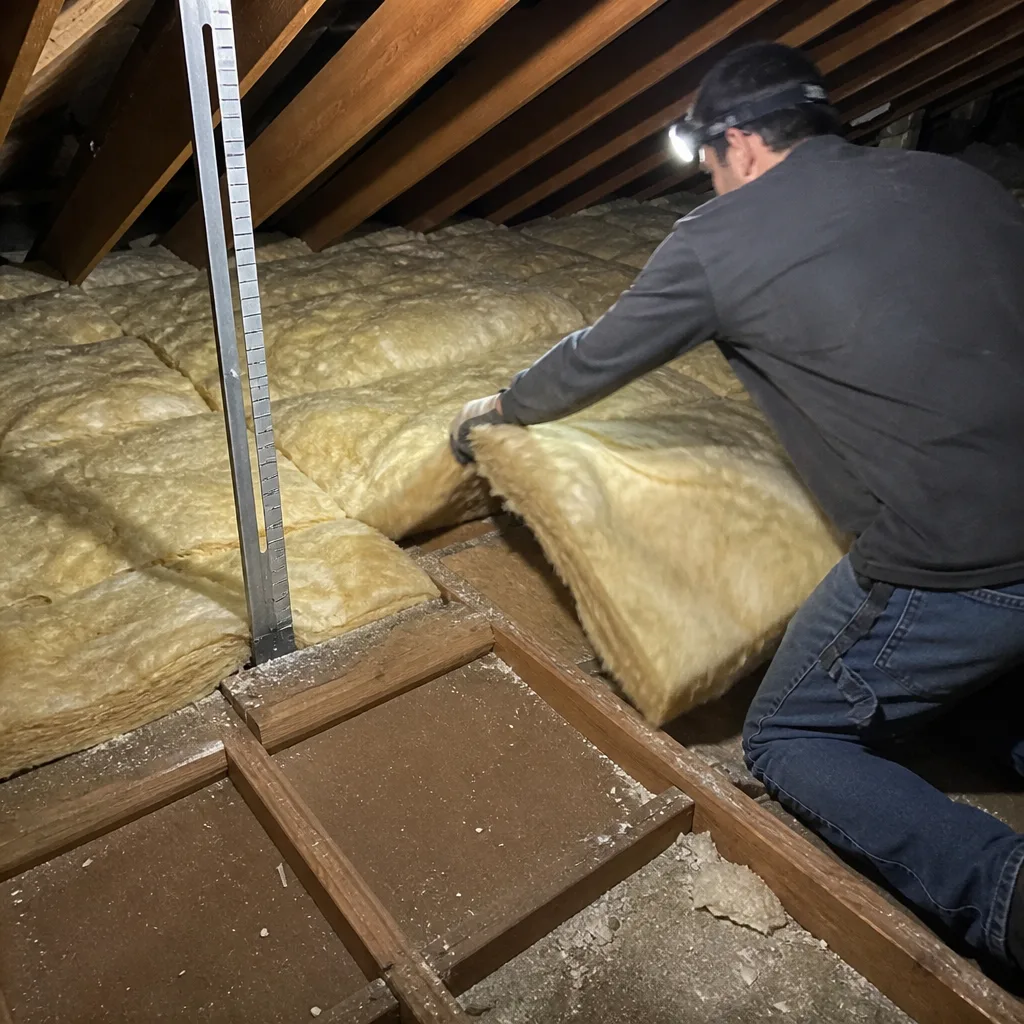
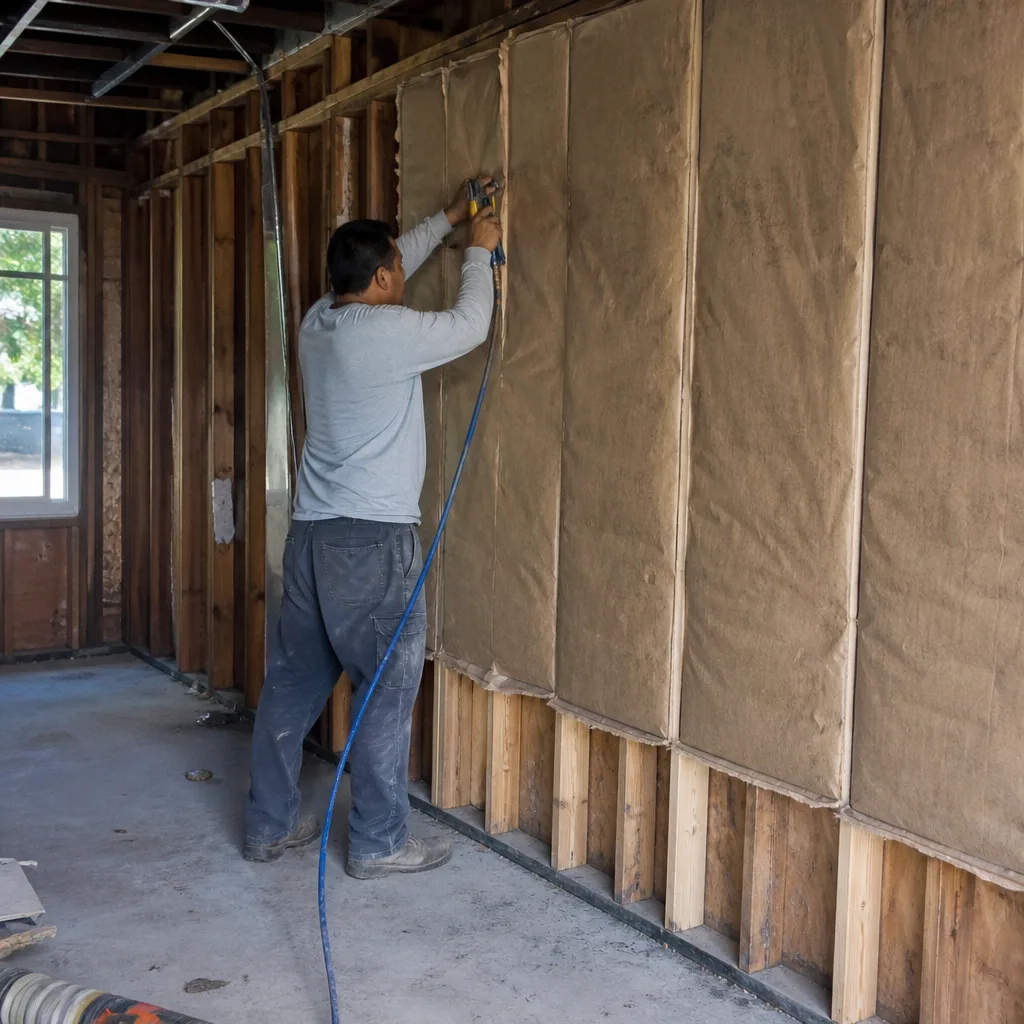
Our Attic Insulation team regularly installs insulation through knee walls, from the exterior, or by carefully notching batts around exposed beams to preserve the look the architect intended. It’s not a standard blow-in. It’s custom work, and it has to be done right or the house develops moisture problems behind the finish. That’s why single-trade specialization matters so much here.
Radiant Barrier in View Park-Windsor Hills
Radiant Barrier in View Park-Windsor Hills is one of the most effective upgrades for these hillside homes because the dominant heat problem is sun, not winter cold. A radiant barrier reflects radiant heat away from the living space, reducing attic temperatures and cutting the heat that radiates down through ceilings and walls. For homes with large west-facing glass or unshaded roof planes, a radiant barrier can drop indoor temperatures noticeably during summer afternoons. A typical radiant barrier installation in View Park-Windsor Hills runs $1,800 to $4,200 depending on roof area and access difficulty. Homes with limited attic space may need the barrier stapled to the underside of roof decking, which is more labor-intensive.
Where Radiant Barrier Fits These Homes
Radiant barrier works best in houses that already have some insulation but still overheat. It’s not a replacement for thermal insulation, it’s a complement. For View Park-Windsor Hills homes with vaulted ceilings and only a few inches of cavity, pairing a radiant barrier with dense-pack insulation in the rafter bays addresses both radiant and conductive heat gain.
Summer Heat, Not Winter Cold
View Park-Windsor Hills sits in a marine-influenced Los Angeles basin climate. Warm dry summers and mild winters mean the insulation strategy flips from what you’d use in the mountains or the Midwest. High R-value batts matter less than stopping radiant heat through glass and roof decking. Radiant barriers and air sealing do more for comfort here per dollar than adding extra inches of fiberglass to a flat ceiling.
Attic Cleaning Services in View Park-Windsor Hills
Attic Cleaning Services in View Park-Windsor Hills matter because these older hillside homes accumulate decades of dust, rodent debris, and sometimes old, compressed insulation that’s doing nothing. Before adding new insulation, the old material often needs to come out. We remove contaminated or degraded insulation, vacuum rat droppings and nesting material, sanitize the space, and prep it for new install. Attic cleaning in View Park-Windsor Hills generally runs $900 to $2,800 depending on attic size, accessibility, and how much material has to be removed.

When Old Insulation Needs Removal
Older homes in the 90043 ZIP frequently have original insulation that’s settled to a fraction of its rated R-value. If rodents have been through, or if there’s been roof leakage, that material needs to go before new insulation goes in. We handle that in-house, which means one crew, one schedule, and no finger-pointing between subs.
Prep Before Retrofit
For cathedral-ceiling homes, cleaning often means clearing debris from rafter bays and confirming that soffit vents aren’t blocked. We also check for the ventilation baffles that prevent insulation from choking airflow at the eaves. Missing baffles are one of the most common problems we find in View Park-Windsor Hills retrofits.
What happens when you call
- 1
A real person answersNo phone trees — you reach a local pro.
- 2
You get an upfront price rangeHonest numbers before anyone is dispatched.
- 3
A background-checked tech heads outLicensed & insured, dispatched right away.
- 4
You approve before work beginsNothing starts until you say go.
Trusted Brands We Service in View Park-Windsor Hills
Ruby Insulation carries Owens Corning, Johns Manville, Knauf, and Rockwool because we need the right material for each View Park-Windsor Hills home. Owens Corning and Johns Manville fiberglass batts fit standard flat-ceiling attics and budget-driven projects. Knauf gives us a high-density option for rafter bays. Rockwool mineral wool matters here because it’s fire-resistant, which gives hillside homeowners an extra measure of protection in wildfire-adjacent neighborhoods, and because its density works well in shallow cavities. We keep local stock so our View Park-Windsor Hills jobs don’t stall waiting on materials. Fast turnaround, one trip, done.
Common Attic Insulation Problems We See in View Park-Windsor Hills Homes
- Blocked soffit vents from improper blow-ins. When loose-fill gets blown into vaulted ceiling cavities without baffles, it slides down and chokes the eave vents. That traps moisture and heat, and we fix it by removing the material and installing proper vent chutes.
- Radiant heat gain through unshaded west-facing glass. Even a well-insulated attic won’t stop the sun heating up living spaces through large view-facing windows. Homes off Windsor Hills Drive with panoramic western exposure overheat in summer regardless of attic condition, so we address the full heat path, not just the ceiling.
- Air bypass around beams and recessed lights. Post-and-beam construction leaves gaps where beams meet decking. Without air sealing, hot attic air moves right past the insulation. We seal these gaps before installing batts, because insulation can’t work if air moves through it.
- Settled, compressed, or rodent-contaminated insulation. Decades-old insulation in these homes often looks fine but tests at a fraction of its original R-value. Rat activity is common in hillside attics. Cleaning and replacement restore thermal performance and get rid of the smell.
Pricing for Attic Insulation in View Park-Windsor Hills, CA
Attic insulation costs in View Park-Windsor Hills run higher than flatland Los Angeles because the work is harder to access. For standard blown-in attic insulation in a conventional attic, expect $1,600 to $3,800 depending on square footage and depth. Cathedral-ceiling retrofits run $4,000 to $9,500 because they require careful cavity work, often from the exterior or through knee walls. Attic cleaning before insulation adds $900 to $2,800. Radiant barrier runs $1,800 to $4,200. The material you choose changes the number: fiberglass batts are the budget option; Rockwool and spray foam cost more but perform better in shallow cavities. Call (833) 356-0182 for a free estimate, and we’ll give you exact numbers based on your house, not a brochure.
We Also Serve Cities Near View Park-Windsor Hills
Our Attic Insulation in View Park-Windsor Hills service area includes the surrounding communities of Westmont, Lennox, Inglewood, and Florence-Graham. If you’re in one of those neighborhoods and need a specialist who understands mid-century hillside construction, we can get to you quickly. Same team, same eight-brand material roster, same straight answers.
Serving View Park-Windsor Hills, CA — Our Local Coverage Area
We’re based in the View Park-Windsor Hills area and know this community well. Use the map below to see our service coverage — if you’re nearby, we can almost certainly help.
FAQs About Attic Insulation in View Park-Windsor Hills
Yes. We install dense-pack or notched batts in the rafter bays while preserving the exposed beam look. We recently tackled a cathedral-ceiling retrofit in a post-and-beam home off Windsor Hills Drive where the original 2×6 rafters left only 5.5 inches for insulation. After air-sealing the tongue-and-groove ceiling from below, we installed Owens Corning R-23 mineral wool batts in the rafter bays, carefully notching around the exposed beams. The homeowner reported a 12°F drop in upstairs temperature during the first heat wave. Call (833) 356-0182 to talk through your ceiling type.
We work through knee walls, from the exterior, or by removing sections of ceiling finish to access shallow cavities. Many View Park-Windsor Hills homes were built with post-and-beam framing and vaulted ceilings, leaving us 3.5 to 5.5 inches of rafter depth to work with. Dense materials like Rockwool or closed-cell spray foam fit that space and deliver real R-value without major reconstruction. We’ve done enough of these retrofits that we can usually tell you the access plan after a single walkthrough.
The best answer usually combines a radiant barrier with dense insulation in the ceiling cavities. Large unshaded west and south-facing glass pours radiant heat into these homes, which is a different problem than conductive heat through walls. A radiant barrier blocks a big share of that radiant load, while Rockwool or spray foam in the rafter bays handles the rest. We choose based on your home’s orientation, roof pitch, and cavity depth.
Yes. Attic cleaning in View Park-Windsor Hills involves removing old or contaminated insulation, vacuuming rodent debris, sanitizing, and prepping the space for new material. Older hillside homes attract rats through roof gaps, and that contamination needs to go before new insulation goes in. We handle cleaning and insulation in one visit, which saves you coordinating two contractors and two schedules.
A radiant barrier reflects the sun’s radiant heat away from your living space, which matters more in View Park-Windsor Hills than extra attic insulation because the climate is mild but sunny. In summer, unshaded roof decking can hit 150°F or more, and that heat radiates down through ceilings all afternoon. A radiant barrier intercepts it before it becomes part of your indoor temperature. Homes with vaulted ceilings and limited cavity space get the most benefit, since they can’t fit the R-value a regular attic can. Call (833) 356-0182 and we’ll tell you if your roof orientation makes radiant barrier worth it.
Written by Noel Ibarra, Owner at Ruby Insulation, serving View Park-Windsor Hills and the surrounding Los Angeles area.