Emergency Attic Insulation Near Me: What Carson Homeowners Should Do First
If you’re searching “emergency attic insulation near me” in Carson, here’s the straight answer: a true insulation emergency in Carson means active water intrusion, exposed electrical wiring, or structural damage from pests. Everything else – a drafty hallway, a warm spot over the bedroom, a musty smell that comes and goes – can almost always wait 48 to 72 hours for a proper assessment. If you’d rather not diagnose this yourself, call us at (833) 356-0182 and we’ll walk you through it over the phone.
Here’s the thing most Carson homeowners don’t realize until it’s too late: what feels like an insulation emergency is usually a symptom of something else. And the contractors who rush to blow in new material without checking what caused the problem? They’re the reason we get calls six weeks later from people who just paid for a fix that didn’t fix anything.
We pulled one out of a home near Carson Park last spring where a homeowner had paid a general contractor $3,800 for emergency insulation replacement after raccoons got into the attic. New fiberglass went in the same day. Six weeks later, the smell was back. Nobody had checked whether the animals had nested in the wall cavity drop-down – the vertical space between studs that connects directly to the attic. The insulation was new. The raccoons were still there. And now the new insulation was contaminated too.
That’s the $3,800 lesson: diagnosis before material, every time. This post walks you through exactly what to assess, what to document, and what to demand before anyone touches your attic.
How to Triage: Is This Actually an Emergency?
Carson’s climate creates a specific set of attic problems. We’re close enough to the coast to get morning marine layer moisture, far enough inland to hit triple digits in August and September, and we sit in a pest corridor – rats, mice, raccoons, and squirrels all find their way into attics here. That combination means insulation gets wet, matted, and chewed through more often than homeowners expect.
But not every insulation problem is a same-day emergency. Here’s how to separate what needs immediate attention from what can wait for a proper diagnostic visit.
True emergencies: act now
- Active water intrusion. If water is currently entering the attic – you can see it dripping, staining drywall, or pooling – that’s a genuine emergency. Wet insulation loses most of its R-value and starts growing mold within 48 to 72 hours. But here’s the key distinction: the insulation replacement isn’t the emergency. Stopping the water is. The insulation work comes after the roof leak, plumbing issue, or HVAC condensate problem is fixed.
- Exposed or damaged electrical wiring. If you can see chewed wire sheathing, sparking, or scorch marks near insulation, cut power to that circuit and call an electrician first, an insulation contractor second. Insulation around compromised wiring is a fire risk, and no legitimate insulation crew will blow material over it.
- Structural pest damage. If rafters, joists, or sheathing are visibly chewed, sagging, or cracked from animal activity, that’s structural – and it can compromise the roof deck. This needs assessment before insulation.
Not emergencies: can wait 48 – 72 hours
- A room that’s suddenly warmer or colder than the rest of the house
- A musty smell that’s noticeable but not overwhelming
- Visible gaps, thin spots, or old, compressed batts
- Evidence of past pest activity (droppings, nesting material) with no current occupants
- Higher-than-normal energy bills with no other obvious cause
For these, a 48-hour wait gives you time to document properly and get a real diagnostic assessment. The contractors who can show up the same day for a non-emergency are usually the ones who skip the assessment step entirely.
The Documentation Checklist: What to Capture Before Anyone Arrives
Here’s where Carson homeowners can protect themselves. Before you call any contractor, spend 20 minutes gathering evidence. This changes the entire conversation from “the insulation guy says I need new insulation” to “here’s exactly what I’m seeing, what’s your diagnosis?”
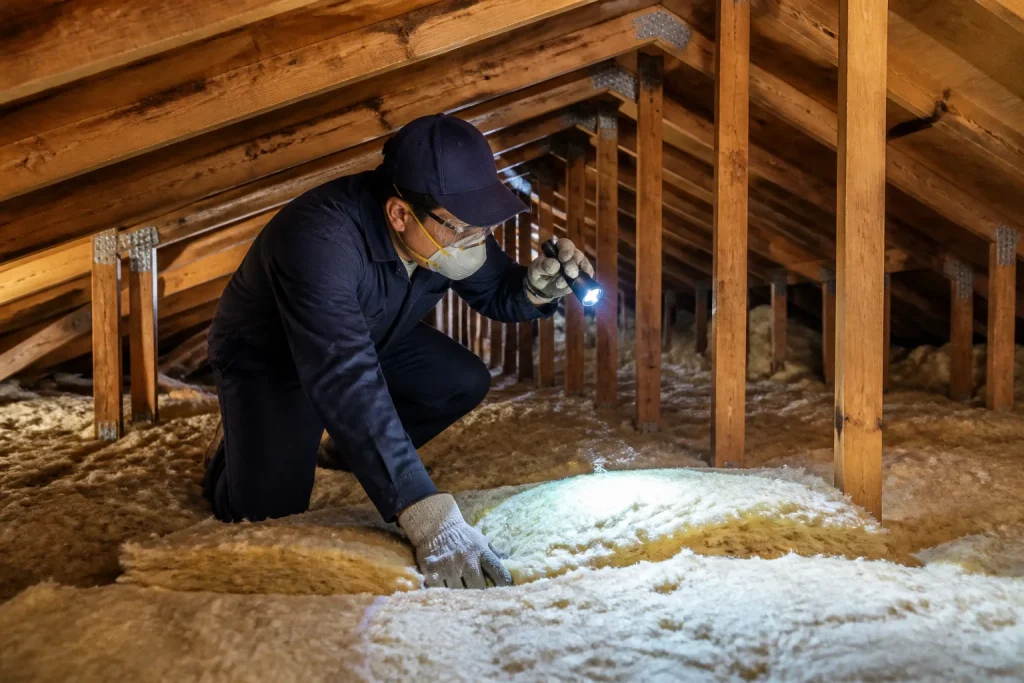
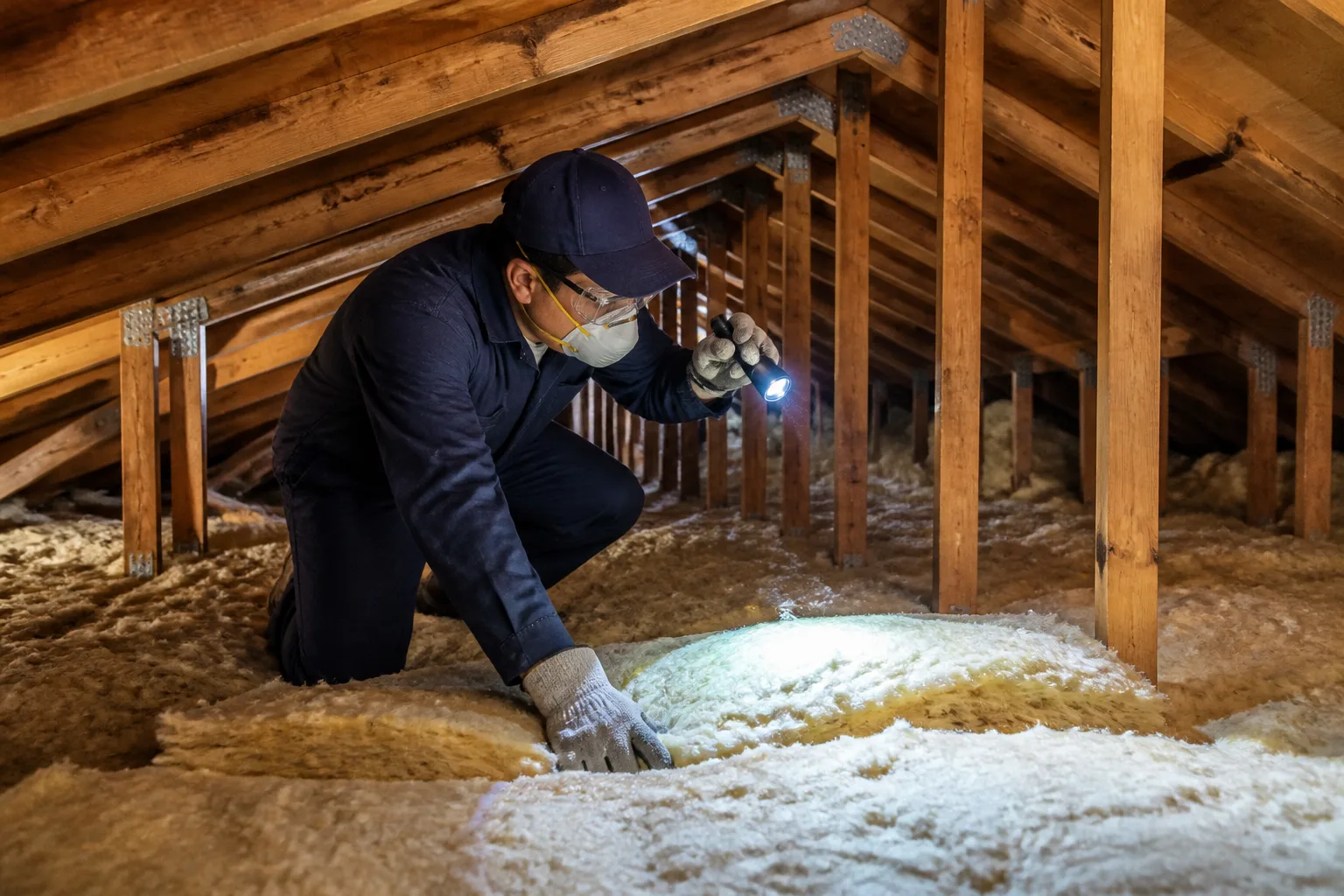
Photos first. Use your phone. Photograph every area of concern from multiple angles: the soffit vents, the gable ends, the hatch opening, any daylight visible through the roof deck, any staining on the insulation surface. If you can safely access the attic, photograph the insulation depth in at least three spots across the attic floor. These photos become your baseline – you’ll compare against them after any work is done.
Moisture readings. A $20 pin-type moisture meter from any hardware store does more than a visual inspection ever will. Probe the roof sheathing near any stains, the insulation itself, and the drywall below suspect areas. Anything above 15 percent moisture content in wood or above 10 percent in drywall indicates an active problem. Write down the readings. A contractor who disagrees with your meter readings should be able to explain why with their own equipment.
HVAC behavior notes. Write down what your system is doing: which rooms are uncomfortable, what times of day it’s worst, whether the system short-cycles (turns on and off frequently), whether any rooms stay comfortable while others don’t. This pattern data is diagnostic gold – it tells a good insulation contractor whether the problem is thermal (insulation), air leakage (air sealing), or mechanical (HVAC).
Energy bill history. Pull 12 months of usage data from your utility account. Carson sits in Southern California Edison territory, and SCE’s online portal lets you download monthly and even daily usage. A sudden spike in cooling costs during a normal summer often points to attic air leakage, not just old insulation.
With this documentation in hand, you’re not at the mercy of a rushed diagnosis. You’re an informed buyer with specific questions.
Pest Contamination: Why Removal Isn’t the Same as Remediation
If rodents, raccoons, squirrels, or birds have been in your Carson attic, you have a problem that goes deeper than insulation replacement. And we see this constantly in Carson’s older neighborhoods – Dominguez Hills, Carson Terrace, the streets around Veterans Park – where mature trees and rooflines create easy animal access.
Here’s what most homeowners don’t know: pest-contaminated insulation isn’t just dirty. It contains urine, feces, parasites, and pathogens that become airborne when disturbed. Raccoon roundworm eggs, for example, can remain viable in attic dust for years and are dangerous to humans. Hantavirus from rodent droppings is a real risk in Los Angeles County. This isn’t a “gross but manageable” situation. It’s a health hazard.
Proper remediation follows a specific protocol. The animals must be excluded first – every entry point sealed, including the wall cavity drop-downs we mentioned earlier. Then contaminated material is removed under containment, usually with HEPA filtration running. Then the space is sanitized. Only after all three steps does new insulation go in.
If a contractor offers to “just blow new insulation over the old stuff” in a pest-damaged attic, that’s a red flag. You’d be sealing contamination inside your home and creating a bigger problem for the next homeowner – or for your own family’s health.
What to ask for in writing: a scope that separates exclusion, removal, sanitization, and new insulation as distinct line items. If the contractor can’t or won’t separate those steps, they’re not doing remediation. They’re doing a cover-up.
How to Vet a Same-Day Insulation Contractor in Carson: Three Questions That Separate Specialists from Generalists
When you’re in a panic about your attic, any contractor with a truck and a blower machine starts to look good. Here are the three questions that will tell you in under ten minutes whether you’re talking to an insulation specialist or a general contractor who happens to have insulation equipment.
Question one: “What’s your diagnosis of the cause?” A real specialist will ask about moisture, pests, ventilation, and timeline before recommending any material. They’ll want to know what changed recently. A generalist will tell you the insulation “looks old” and quote you a price. Insulation does age, but age alone is rarely an emergency. If the answer to “what caused this” is vague, the fix will be too.
Question two: “What material would you use, and why that one?” This is the question that exposes one-size-fits-all installers. The right answer depends on your attic’s specific conditions. Is it vented or unvented? Is there existing moisture? Are there pest concerns? Do you need fire resistance in certain wall cavities? We carry multiple material categories – blown-in fiberglass, cellulose, mineral wool, open-cell and closed-cell spray foam – because no single material is right for every Carson attic. A contractor who only installs one thing will recommend one thing, no matter what the diagnosis says. If you need spray foam insulation in Bell-style performance, or if your home has different needs entirely, the material choice should follow the diagnosis, not the other way around.
Question three: “What do you do between removal and installation?” This separates remediation-capable specialists from blower-truck operators. The answer should include air sealing (in most cases), ventilation assessment, and any sanitization steps if pests were involved. If the answer is “we just blow it in,” you’re getting a material swap, not a solution.
Almost every call we get about attic insulation in Carson starts with questions like these. And because Ruby Insulation home is focused exclusively on insulation – not plumbing, not roofing, not HVAC – we’re equipped to answer them specifically. Insulation is all we do.
Interim Steps That Actually Help (And DIY Moves That Make It Worse)
If you’re waiting 48 to 72 hours for a proper assessment, there are things you can do that genuinely reduce damage and discomfort. And there are things you should absolutely not do.
Steps that help
- Check your HVAC filter. In Carson, dust from attic air leaks gets pulled into the return air stream. A clogged filter makes your system work harder and can mask the actual insulation issue. Install a fresh filter and note the date.
- Temporary weatherstripping. The attic hatch or pull-down stair is one of the biggest air leakage points in any Carson home. A $12 roll of adhesive weatherstripping around the hatch perimeter reduces the immediate draft while you wait.
- Tarping for active leaks. If water is coming through the roof, a tarp over the affected area buys you time. Secure it properly – a loose tarp becomes a wind sail in Carson’s Santa Ana conditions and can cause more damage.
- Close interior doors to the affected area. This slows the spread of unconditioned air and isolates the problem room while you wait for assessment.
Steps that make it worse
- Sealing attic vents. We’ve seen Carson homeowners stuff rags, cardboard, and even spray foam into soffit and ridge vents trying to stop drafts. This traps moisture in the attic and accelerates mold growth. Attic ventilation exists on purpose.
- Pulling out contaminated insulation yourself. Without proper containment and respiratory protection, you’re aerosolizing whatever’s in that material throughout your home. This is a job for HEPA-equipped professionals.
- Sweeping or vacuuming rodent droppings. Same problem. Disturbing dry droppings releases what you don’t want in your lungs. Leave it for remediation.
- Running space heaters in the attic to “dry it out.” We get the logic. But unattended heat sources in an attic full of potentially damaged wiring is a fire risk, plain and simple.
If you’re not sure whether a step helps or hurts, call before you act. A five-minute phone call is cheaper than a mistake. Call us at (833) 356-0182 and we’ll tell you honestly whether it’s urgent or can wait.
Related Services in Carson
The right fix depends on your attic’s condition and your home’s structure. For homes with vented attics and accessible floor cavities, attic insulation in Bell-style projects typically involve blown-in fiberglass or cellulose. For homes where air sealing is the bigger issue – and in Carson, it usually is – spray foam applied to the attic floor or roofline makes a bigger impact than additional batts. And for homeowners with older, drafty homes where insulation has settled to near zero, blown-in insulation in Bell applications restore the thermal barrier without a full attic gut.
We work with multiple material categories and brands – Icynene and Demilec for spray foam, CertainTeed and others for fiberglass, Rockwool for fire-resistant mineral wool applications, GreenFiber for recycled-content cellulose – because the material should match the situation, not the other way around. That product-fit flexibility is a big part of why homeowners in Carson call us when the first fix didn’t hold.
What happens when you call
- 1
A real person answersNo phone trees — you reach a local pro.
- 2
You get an upfront price rangeHonest numbers before anyone is dispatched.
- 3
A background-checked tech heads outLicensed & insured, dispatched right away.
- 4
You approve before work beginsNothing starts until you say go.
The Bottom Line
An attic insulation emergency in Carson is almost never just about insulation. It’s about what caused the problem – water, pests, wiring, or air leakage – and whether that underlying issue gets addressed before new material goes in. Skipping the diagnostic step is how a $1,200 insulation replacement becomes a $4,000 remediation job six weeks later.
Document first. Assess the actual urgency. Vet the contractor with specific questions. And if the process feels like more than you want to manage, that’s exactly what we’re here for. If you’re in Carson and dealing with an attic that’s failing you, call us at (833) 356-0182. Estimates are free, and we’ll tell you honestly whether you need us this week or not at all.
Frequently Asked Questions
Emergency attic insulation in Carson typically costs between $1,200 and $3,800 for a standard single-family home, depending on attic size, material type, and whether contamination remediation is required. Pest-contaminated attics run higher because removal, sanitization, and new material are separate steps. Call (833) 356-0182 for a specific quote on your attic – estimates are free.
Yes, in most cases, removal of old attic insulation can be completed same-day in Carson with HEPA-filtered removal equipment. If pest contamination is present, the space should be sanitized before new material goes in, which may add a day to the timeline. Call (833) 356-0182 to schedule a same-day assessment.
For most Carson attics, targeted replacement costs less than attempting to repair damaged insulation. Wet, molded, or pest-contaminated insulation can’t be meaningfully repaired – it loses R-value permanently and continues degrading. Replacing the affected areas with the right material for your attic’s conditions is almost always the better long-term value. Call (833) 356-0182 and we’ll assess honestly whether repair is even an option in your case.
The best insulation for a Carson attic depends on the attic’s ventilation, existing moisture levels, and whether you need air sealing along with thermal resistance. Blown-in fiberglass and cellulose work well for vented attics with accessible floor cavities. Spray foam – both open-cell and closed-cell – provides air sealing and insulation in one step for unvented or problematic attics. Mineral wool offers fire resistance for specific applications. A specialist assessment, not a brand preference, should drive the choice. Call (833) 356-0182 to talk through what fits your home.
Written by the team at Ruby Insulation, serving Carson since 2013.
Need Insulation Help?
Call Ruby Insulation — licensed & insured, here with fast after-hours help in Bell.
(833) 356-0182